
Asia's crises no longer arrive one at a time. Dengue spreads faster as the climate warms, development aid contracts, and inclusion gaps widen in step with both. Systems-change philanthropy in Asia responds to that shift by funding networks rather than single projects, treating climate, health and inclusive development as parts of one problem rather than three. The pattern ran through the first episode of Asian Innovation for Global Good, a podcast series by FP Studios and Philanthropy Asia Alliance (PAA).
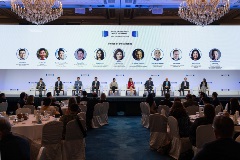
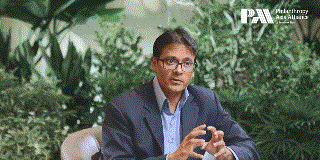
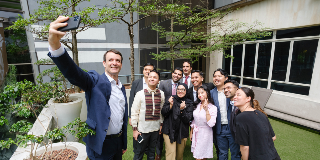
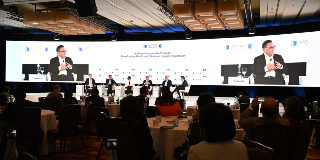
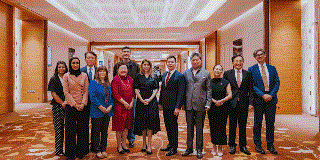
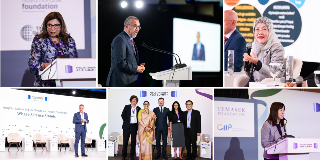
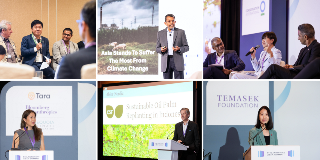
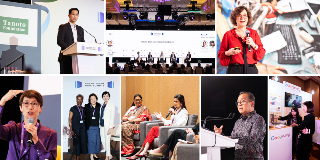
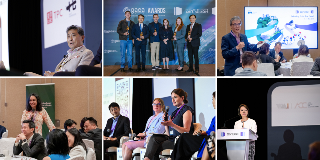
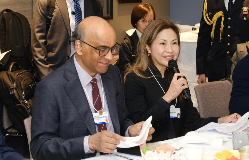
The episode was recorded live at the sixth Philanthropy Asia Summit in Singapore, where more than 2,500 delegates from over 60 countries gathered for three days of climate and health discussions alongside inclusive development work. Host Rob Sachs, Vice President of Audio at FP Studios, spoke with Naina Subberwal Batra of AVPN, Shaun Seow of PAA, Carolina Suárez of Latimpacto, Shamina Singh and Shuba Chandran of the Mastercard Center for Inclusive Growth, and Sarawak's Premier, The Right Honourable Datuk Patinggi Tan Sri (Dr) Abang Haji Abdul Rahman Zohari bin Tun Datuk Abang Haji Openg. Their conversations moved from one foundation's decade-long wager on dengue control to a five-country outbreak intelligence platform, then widened further into financial inclusion policy and state-level development strategy.
Patient capital, proven over a decade

Shaun Seow points to the fight against dengue as the clearest case for what systems-change funding requires. Vector-borne diseases claim more than 700,000 lives a year, and Asia carries one of the heaviest burdens of any region as warming widens mosquitos’ range. Driven by a “personal episode where family members were affected by dengue," Indonesia's Tahija Foundation backed an idea nobody else would touch, "investing millions of dollars over more than a decade to tackle the problem of dengue," as Seow puts it, before it found an answer worth scaling. The project aimed at controlling the transmission of the dengue virus with the novel use of the Wolbachia bacteria. The country's government has since taken the method nationwide, and Singapore has adopted it too, transforming one family's private wager into a regional public health tool built on Asian funding rather than external aid.
From reaction to prevention
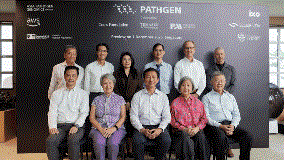
Where dengue intervention took a decade to move the needle, PathGen is built to catch the next threat before it spreads. Temasek Foundation and PAA fund the platform through PAA's Health for Human Potential Community, working with Duke-NUS' Centre for Outbreak Preparedness to pair pathogen genomics with contextual signals such as population movement and climate data. As Shaun explains, the aim is that “the next virus you detect, can then be input into the system and very quickly made sense of.” Five countries are building the underlying model together, each retaining ownership of its own data while still drawing on shared, fast-turnaround insight. The long-term target to expand adoption to fourteen countries reflects a wider principle behind PAA's funding, back solutions that can be replicated, so others can carry them further.
Listening before scaling

Financial inclusion, as defined by Mastercard Center for Inclusive Growth's Founder & President Shamina Singh, is "the ability to save, store and spend money safely." That definition matters because much of Asia still runs on a cash economy, one whose costs include crime and corruption that formal systems can reduce. Turning the principle into policy required listening in specific markets rather than applying a single model everywhere. In Pakistan, regulation required women to have a male guarantor before they could access funding, until the Center's regional team traced the barrier back to an asset many families already held, gold, typically given as dowry and sitting unused at home. Working with financial institutions and the central bank, the team established gold as alternative collateral, letting women guarantee loans without a male co-signer. PAA and the Center formalised a three-year partnership during the summit that will test similar models for financial resilience and economic participation across Asia.
Systems beyond borders

The same logic surfaced away from health and finance, in cross-regional exchange and government policy alike. Latimpacto's Carolina Suárez points to a green catalytic fund for the Amazon Basin, which pools private corporate finance with international climate funds and channels the combined resources through multilateral development banks to entrepreneurs on the ground. The model treats each layer of funding as one connected system rather than a series of separate transactions, and Suárez sees a parallel role for philanthropists: "being more catalytical, a convener of different initiatives."

Sarawak's government took that same instinct into policy. Solar power, installed in place of diesel generation, that gave remote communities a source of income they hadn't had before, was built on the premise that development must start from the community itself.
Where Asian giving is headed
Across dengue control, outbreak intelligence and inclusive finance, every interviewee arrived at the same position from a different direction. No single intervention moves fast enough against problems that compound together. Funders who treat health and financial systems as one connected whole are setting the pace for what Asian philanthropy can achieve next. The series continues with a related question, how impact investing takes root in a region still building the infrastructure to support it, tracing a path other funders may recognise as their own.
Listen to episode 1 of the podcast here: https://foreignpolicy.com/podcasts/asian-innovation-for-global-good/










.tmb-.gif?Culture=en&sfvrsn=e13997ec_1)
.tmb-.gif?Culture=en&sfvrsn=b5ece239_1)
.tmb-.gif?Culture=en&sfvrsn=6fb3b6df_1)
.tmb-.png?Culture=en&sfvrsn=7fea9931_1)
.tmb-.gif?Culture=en&sfvrsn=3f4b1163_1)
.tmb-.jpg?Culture=en&sfvrsn=fedc60fc_1)