
Before sunrise, the road to Gleno climbs into clouds. The district of Ermera sits in the mountains above Timor-Leste’s capital Dili, and the mist over its slopes does more than soften the view. Distance and thin infrastructure decide who reaches a classroom here, and who finishes a school year. For the children of these highlands, geography is the first obstacle between them and a future.
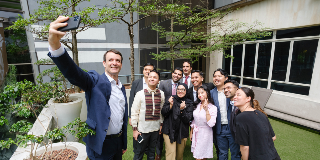
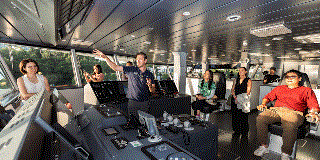
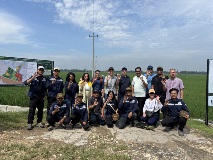
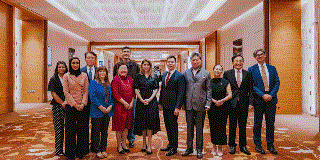
Ten philanthropists from China and Singapore travelled to Asia’s youngest nation in the days after the Philanthropy Asia Summit 2026. The convening’s core conversation had turned on how funders can help solve the region's most pressing challenges, with climate resilience and ocean health among them. Organised by the Philanthropy Asia Alliance (PAA), the Summit’s first overseas Impact Journey led delegates on a five-day exploration of Timor-Leste, moving through schools and health centres, coffee farms and mangrove beds, coral reefs and community spaces.
One of Asia’s last true frontier economies, Timor-Leste is still assembling the public systems with connected infrastructure, and the journey set out to test where philanthropic capital can do the most good alongside an ambitious government building those foundations in real time.

Ensuring an early start, and the technology to reach further
In a country where 47% of children under five experience stunting, the groundwork of opportunity must be laid early. In one of the schools of Ermera, the delegates encountered Lafaek, the Tetun-language educational magazine produced by CARE International with the Ministry of Education. A household name carried into classrooms and homes across the country, Lafaek has taught Timorese children to want to read for over a generation. Educators and ministry representatives described the long work beneath that achievement, strengthening foundational literacy and numeracy, supporting teachers, and building classrooms where a child can learn rather than merely attend.
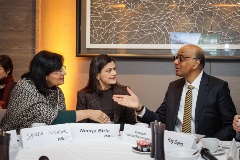
A lunch discussion brought further insights on the state of education. At Kantina Matak, a community kitchen inside the Presidential Palace, the delegation met President José Ramos-Horta, who spoke candidly about where philanthropy might complement the work of the government. The exchange that drew the most attention concerned school meals. A meal sounds like a modest service, yet its effects run deep. A child who eats at school attends classes, a child who attends learns, and learning converts in time into a livelihood and economic participation and growth. A simple intervention, traced forward, becomes a powerful lever on a nation's future success.

At a following roundtable, Education Minister Dulce de Jesus Soares spoke about a sector shaped by limited resources and competing demands. National literacy remains low, infrastructure gaps persist, and the quality of teaching varies sharply from one school to the next. Within those constraints, however, sits considerable ambition. The Minister set out a vision for developing teachers through a ‘Train the Trainers’ model that could lift capability more efficiently. She also described how AI-assisted tools might extend a teacher's reach and open more room for genuine engagement with students.
During a stop at Gleno Community Health Centre in Ermera, Catalpa and the Ministry of Health showed how digital tools can strengthen frontline healthcare delivery. The centre was one of the sites involved in Timor-Leste’s first phase of a World Health Organization-supported programme to improve primary healthcare for noncommunicable diseases. It combined household-level screening for hypertension and diabetes, health education, and integrated management across community health centres, health posts and mobile clinics.

Aligning climate action with the realities of rural livelihoods
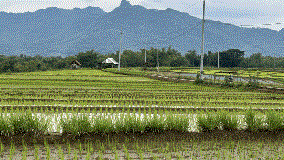
Coffee remains the country's most important non-oil export and, in rural districts, a primary source of household earnings. This reality calls for climate action solutions to be designed around rural economics. Delegates could experience this approach on a coffee farm in the Aileu’s highlands, where the air cools and the green deepens. Managed by Asosiasaun Café Timor, formers demonstrated how harvesting practice, quality improvement, and climate adaptation form one continuous story of resilience rather than a set of separate fixes.
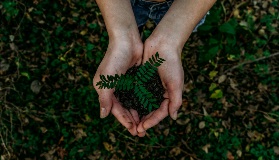
Winding through the mountain ridges, the group then travelled to Liquiçá, visiting Rai Matak's nursery, where smallholder farmers grow trees to restore degraded land and, in the same motion, earn income through carbon markets.

At a mangrove rehabilitation site near Ulmera, run by Conservation International and the Alola Foundation, this economic principle became even more tangible, with roots gripping soil, a coastline knitting back together, and women drawing new livelihoods from the restoration itself through salt-making and seaweed farming.
The recurring lesson that sat beneath these visits of these farms and forests demonstrated that resilient communities are built through connected institutions working as one rather than isolated programmes running in parallel.
President Ramos-Horta added to this experience during his sharing with the group. He spoke of highland families who burn firewood to stay warm in poorly ventilated homes, a reality at odds with the coastal heat that had shaped the delegation's first impressions of the nation’s capital, Dili. The Impact Journey had been built to surface contrasts like these, giving the delegates unfiltered access to conditions on the ground.

The richest reefs on Earth, and the coastal communities that guard them
From land, the journey turned to the sea, where Timor-Leste's economic and ecological stories converge most visibly. A short charter flight north of Dili reaches Ataúro, a green ridge ringed by deep blue water. The light aircraft is operated by Mission Aviation Fellowship, a Christian aviation organisation that has worked in Timor-Leste since 2007, connecting remote communities to medical care, humanitarian support and essential services.
The island carries the highest average reef-fish diversity recorded per survey site globally, and sits within the Coral Triangle, the richest marine biodiversity zone on Earth. There, the delegates met Blue Ventures and learnt about community-led conservation built on tara bandu, a customary governance practice through which communities themselves manage and protect natural resources, before a boat carried them into a protected reef to snorkel over coral gardens alive with fish.
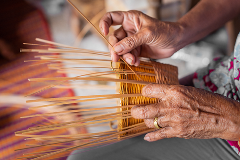
Conservation here is inseparable from how people make a living. At Boneca de Ataúro, the delegation met the women behind a cooperative that has sustained local families for more than two decades through textiles, handicrafts, and social enterprise. Ocean protection, household income, and women's economic agency move together on the island, bound into one fabric where pulling on a single thread shifts the rest.
That logic continues at Timor-Leste's waters. The Coral Triangle spans six nations and underwrites the food security of the wider region. What any state protects within its own boundaries becomes a contribution to Southeast Asia's shared ecological inheritance.

The case for betting on Timor-Leste
Over a dinner hosted by Shaun Seow, PAA's CEO, the delegates returned to what the five days had shown them, reflecting on what interventions can make a lasting difference, reaching well beyond money. Funders can help test ideas before public budgets can justify the risk, strengthen local capacity, and back the structures that serve communities long after a single grant has run out.
Timor-Leste carries complex development challenges. What delegates experienced were multiple places where progress is already taking root, and where conviction-led capital, placed beside a government building a nation’s future, could help accelerate that momentum. PAA will continue working with its members and partners to find avenues where that support can achieve the most. The visit offered a glimpse into a country rich with promise, opportunity and determination, and of how patient philanthropy can help that progress travel further.








.tmb-.gif?Culture=en&sfvrsn=e13997ec_1)
.tmb-.gif?Culture=en&sfvrsn=b5ece239_1)
.tmb-.gif?Culture=en&sfvrsn=6fb3b6df_1)
.tmb-.png?Culture=en&sfvrsn=7fea9931_1)
.tmb-.gif?Culture=en&sfvrsn=3f4b1163_1)

.tmb-.jpg?Culture=en&sfvrsn=fedc60fc_1)