
The conditions in which philanthropy operates are shifting at unusual speed. Fiscal tightening and geopolitical friction are reshaping capital flows. Climate volatility is compounding pressure on health systems, raising the burden of antimicrobial resistance and vector-borne disease. Ocean ecosystems are deteriorating at a pace that outstrips the financing available to protect them.
Asia's challenges have grown more interconnected, and the institutions responding to them must now organise differently.
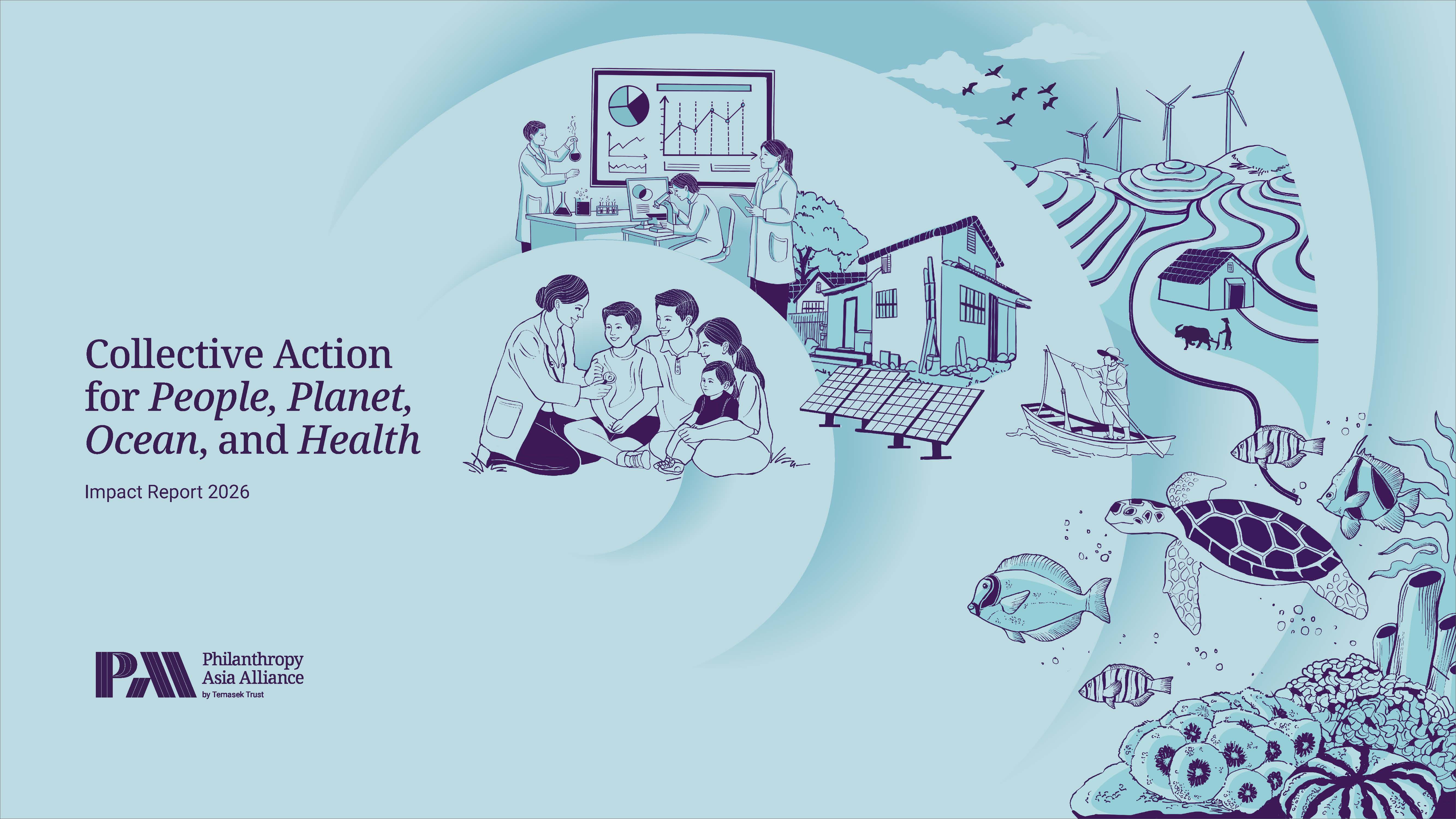
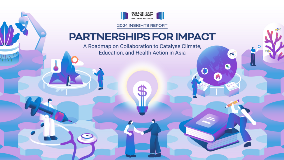
Philanthropy Asia Alliance's 2026 Impact Report documents how the Alliance is responding to that shift. USD 615 million has been mobilised in support of more than 300 projects spanning Climate, Health, and Inclusive Development in the Alliance’s third year. Of that figure, USD 50 million has gone to 24 catalytic programmes designed to absorb early risk and crowd in larger pools of co-funding for policy-relevant work.
Communities take the operating weight
Beneath those figures lies a deeper shift in how the work is now organised. Through its first two years, PAA's role centred on convening, bringing diverse institutions into shared rooms and helping them identify where a trusted intermediary could add distinctive value. That role created the conditions for a more operational stage. The Alliance now organises the bulk of its members' joint work through Communities, each oriented around a thematic priority and structured to move funders past conversation and into programme design and joint funding decisions.
Members have been clear about why. Systemic challenges defeat isolated interventions because their causes overlap. Ocean decline interacts with climate volatility and with coastal livelihoods; infectious disease readiness depends on data flows and pathogen surveillance no single institution can run alone. Capital that arrives without connecting structures rarely produces the change funders seek.
The Communities provide that operating layer. Blue Oceans, alongside Sustainable Land Use and Holistic and Inclusive Education, launched at the 2024 Philanthropy Asia Summit. Health for Human Potential and Just Energy Transition followed in 2025.
Ocean protection, in operating mode
The Blue Oceans Community, co-led by Dalio Philanthropies and Tsao Pao Chee, illustrates what that operating model produces over time. In its early phase, the Community focused on building shared evidence and a common understanding of regional priorities. Over the past year, its emphasis has moved further into coordination and delivery, with members aligning around clearer programme priorities and pursuing more deliberate pathways to scale.
In Indonesia, SEAFOAM (the Southeast Asia Framework for Ocean Action in Mitigation), led by Climateworks Centre, has worked closely with national ministries to support the country's Second Nationally Determined Contribution, submitted in October 2025. The programme helped ensure that ocean and coastal ecosystems are now more clearly reflected in national climate planning, and that blue carbon is built into Indonesia's long-term mitigation pathway.
Scaling Ocean Conservation through Protection and Production, led by Conservation International, has gone further still. Indonesia's Fisheries Management Area WPP 572, covering 94.3 million hectares off western Sumatra, has been the focus of pelagic data collection and stock assessments over the past year. That evidence informed a science-based fisheries management plan now finalised and awaiting authorisation as a ministerial decree. Mangrove restoration over roughly 60 hectares within the wider management area has accompanied that effort, with a long-term mitigation ambition of up to 12.5 million tonnes of CO₂ equivalent.
A pipeline of next-stage initiatives is taking shape under the same banner. The 30×30 Southeast Asia Ocean Fund channels catalytic capital toward priority Marine Protected Areas, closing the gap between formal designation and sustained management. Working alongside it, the Global Oceans Innovation Challenge, delivered with The Nature Conservancy, supports technological solutions for marine protection and sustainable fisheries.
Health and climate, treated as one
Health for Human Potential, launched at the 2025 Philanthropy Asia Summit, has moved at speed. Anchored by the Gates Foundation, Institute of Philanthropy, Quantedge Advancement Initiative, Tanoto Foundation, Temasek Foundation, and PAA, and joined in January 2026 by Children's Investment Fund Foundation, the Community set out an ambition to mobilise more than USD 100 million in catalytic funding by 2030. Commitments within the first year have already reached half of that target.
Initial efforts concentrate on Indonesia, the Philippines, and Vietnam, Southeast Asia's three most populous countries, where strong progress on Sustainable Development Goals can accelerate as funding aligns more closely with technical capability and delivery systems. PathGen, an AI-powered platform led by the Duke-NUS Centre for Outbreak Preparedness, illustrates the systemic logic in operation. The platform combines pathogen genomics with environmental and climate data to give public health agencies earlier intelligence on infectious disease threats, drawing on the technical capacity built through the Asia Pathogen Genomics Initiative, under which 185 laboratory specialists from 16 countries have been trained.
Coalition-level engagement extends that logic. PAA's participation in the Climate and Health Funders Coalition has added Asian perspectives to a USD 300 million commitment announced at COP30 in Brazil, focused on the rising health burden of extreme heat and climate-sensitive infectious disease. Climate volatility is shifting disease patterns across the region, and a Community designed to act on both the climate and the health dimension can mount integrated responses.
Institutions equipped to address Asia's most consequential challenges are coming to resemble what the Alliance is building, with resources organised around shared priorities and evidence flowing freely between practitioners and the partners delivering the outcomes. The 2026 Impact Report sets out where collaborative philanthropy in Asia stands and where the Alliance’s Communities are taking it next.

.tmb-.png?Culture=en&sfvrsn=4c9d7897_1)

.tmb-.png?Culture=en&sfvrsn=efaef866_1)